We're getting things ready for you....

Your average price per kilowatt-hour (kWh) may look different from the price on the Electricity Facts Label (EFL). This is common, especially on first bills or bills with fewer days than normal, and it doesn’t mean your rate has changed.
This page explains what your average price means, why it can look different from your EFL price, and why it usually evens out on future bills. The Public Utility Commission of Texas (PUC) defines how average prices are calculated on both the EFL and customer bills to ensure consistency and transparency across providers.
The average price per kWh on your bill is the average price you paid for electric service during that billing cycle, calculated as:
Total recurring electric service charges ÷ Total kWh used
This calculation:
This number reflects your actual usage and billing days, which is why it may look different from the average price shown on your EFL.
Your EFL shows a standardized average price per kWh calculated at specific usage levels (500, 1000, or 2000 kWh), as required by the Public Utility Commission of Texas (PUC).
The EFL average price:
Your average price per kWh on the bill, on the other hand:
Because real world usage changes and rarely matches the EFL’s standard examples, it’s normal for your bill’s average price to differ from the EFL.
This most commonly happens with short or partial billing cycles, typically at the start of service.
When your bill covers fewer days than normal, monthly base charges are still applied but divided by a smaller kWh usage amount. This can make your average price per kWh look higher, but it doesn’t mean your rate has changed.
As your billing cycles return to a normal length (around 30 days), your average price typically comes back in line with expectations.
Yes. For most customers:
You can rest easy knowing that your rate is protected for the length of your fixed-rate plan.
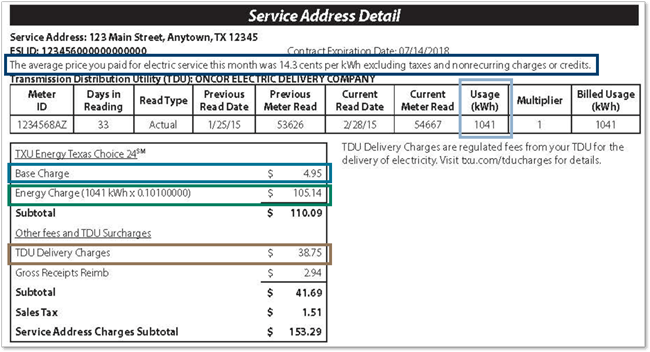
To determine your average price per kWh, you’ll need a copy of your current bill. Reference the Service Address Detail section of your bill and follow the calculation provided below:
Average Price Paid is calculated as the total of your:
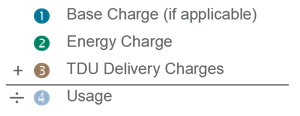
Note: Applicable credits and discounts may change the above calculation. Meter readings occur about every 28 to 32 days. On your first bill, the Days in Reading is usually less than 28 days. This could cause your usage to be lower – while charges, like your base charge and monthly TDU delivery charge, may stay the same and result in a higher average price.